Drug name
Last update: Apr 2026Lenacapavir 6-Monthly
Developer(s)
Drug information
Lenacapavir
Sunlenca
Small molecule
Not provided
Six monthly lenacapavir (LEN) is a subcutaneous injectable formulation used for the treatment of multi-drug resistant HIV-1 infection in combination with other antiretrovirals and is currently being studied as potential HIV pre-exposure prophylaxis (PrEP). Two large Phase III clinical trials (PURPOSE 1 & 2) and three Phase II trials (PURPOSE 3, 4 & 5) are currently evaluating the safety and efficacy of subcutaneous lenacapavir for PrEP. Six-monthly LEN is administered subcutaneously every 26 weeks (+/- 2 weeks from date of last injection) following an initial two day oral-loading period of 600 mg (2 x 300-mg tablets). LEN was approved in the EU for the treatment of HIV-positive adults with multidrug resistance in Aug 2022, and received approval from the U.S. FDA in Dec 2022.
Lenacapavir (SUNLENCA) 463.5mg/3ml subcutaneous injection with 300mg oral lead-in tablets are approved for use in the United States, United Kingdom, Canada, UAE, South Korea, Hong Kong, Japan, Australia, Israel, and the European Union (27-member states of the European Union, as well as Norway, Iceland and Liechtenstein) for HIV-1 treatment under certain conditions. For PrEP: Gilead submitted an application to the US FDA for Lenacapavir in December 2024 and was granted priority review with a decision expected by June 19, 2025. It is also under review in Brazil, EU (+EEA) and South Africa.
US FDA granted Breakthrough Therapy Designation for SUNLENCA in combination with other antiretroviral drugs for heavily treatment-experienced patients (HTE) adults with multi-drug resistant (MDR) HIV-1 infection failing their current antiretroviral regimen due to resistance, intolerance, or safety considerations. A European Marketing Authorization was issued for the use of SUNLENCA and it has also been classified as ‘Fast-Track Reimbursement’ by the Ministry of Health, Labour and Welfare, Japan, and ‘Part 1- Schedule 1 & Schedule 3 Poison’ by the Department of Health, Hong Kong.
Therapeutic area(s)
- HIV
- Pre-Exposure Prophylaxis (PrEP)
- Treatment
- Prevention
Administration route
Subcutaneous, Oral
Associated long-acting platforms
Aqueous Solution, Oral solid form
Use of drug
- Administered by a nurse
- To be determined
- Every 6 months
Not provided
Dosage
Oral lead-in LEN tablets 300 mg; Each injection contains 927 mg of lenacapavir in solution.
Not provided
For PrEP: Initiation Option 1: Day 1: 927 mg by subcutaneous injection and 600 mg orally (2 x 300-mg tablets). Day 2: 600 mg orally (2 x 300-mg tablets). Initiation Option 2: Day 1: 600 mg orally (2 x 300-mg tablets). Day 2: 600 mg orally (2 x 300-mg tablets). Day 8: 300 mg orally (1 x 300-mg tablet). Day 15: 927 mg by subcutaneous injection. Maintenance: 927 mg by subcutaneous injection every 26 weeks +/- 2 weeks from date of last injection. For the treatment indication, lenacapavir is administered as part of a full treatment regimen with the relevant associated medicines.
Not provided
Associated technologies
Not provided
Comment & Information
Developer(s)
Gilead Sciences Inc.
Gilead Sciences, Inc. is a multinational biopharmaceutical company that develops and manufactures innovative medicines for life-threatening diseases, including anti-viral therapeutics for HIV/AIDS, Hepatitis B, Hepatitis C and Covid-19. Headquartered in Foster City, California, Gilead was originally founded in 1987 and is currently listed on both the S&P 500 and the NASDAQ Biotechnology Index.
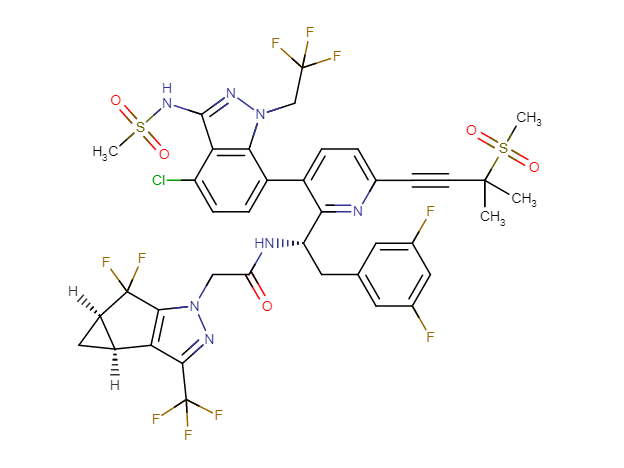
Drug structure
Scale-up and manufacturing prospects
Compound is commercially manufactured.
Equipment: Stainless steel pharmaceutical reactors, glass-lined reactors, rotary evaporator (rotovap), flash chromatography columns, stainless steel autoclave, cooling bath, silica gel chromatography columns, vacuum distillation apparatus, simulated moving bed chromatography system, Chiralpak columns.
Storage of injectable lenacapavir in borosilicate vials is contraindicated due to issues with chemical compatibility. Instead, it is recommended that vials are made from aluminosilicate glass.
Proton nuclear magnetic resonance (1H NMR), High-performance liquid chromatography (HPLC), Ultra-Performance Liquid Chromatography (UPLC).
Excipients
No proprietary excipient used
No novel excipient or existing excipient used
No residual solvent used
Delivery device(s)
No delivery device
Publications
Link JO, Rhee MS, Tse WC, Zheng J, Somoza JR, Rowe W, Begley R, Chiu A, Mulato A, Hansen D, Singer E, Tsai LK, Bam RA, Chou CH, Canales E, Brizgys G, Zhang JR, Li J, Graupe M, Morganelli P, Liu Q, Wu Q, Halcomb RL, Saito RD, Schroeder SD, Lazerwith SE, Bondy S, Jin D, Hung M, Novikov N, Liu X, Villasenor AG, Cannizzaro CE, Hu EY, Anderson RL, Appleby TC, Lu B, Mwangi J, Liclican A, Niedziela-Majka A, Papalia GA, Wong MH, Leavitt SA, Xu Y, Koditek D, Stepan GJ, Yu H, Pagratis N, Clancy S, Ahmadyar S, Cai TZ, Sellers S, Wolckenhauer SA, Ling J, Callebaut C, Margot N, Ram RR, Liu YP, Hyland R, Sinclair GI, Ruane PJ, Crofoot GE, McDonald CK, Brainard DM, Lad L, Swaminathan S, Sundquist WI, Sakowicz R, Chester AE, Lee WE, Daar ES, Yant SR, Cihlar T: Clinical targeting of HIV capsid protein with a long-acting small molecule. Nature. 2020 Aug;584(7822):614-618. doi: https://doi.org/10.1038/s41586-020-2443-1. Epub 2020 Jul 1.
Oral antiretroviral agents provide life-saving treatments for millions of people living with HIV, and can prevent new infections via pre-exposure prophylaxis1-5. However, some people living with HIV who are heavily treatment-experienced have limited or no treatment options, owing to multidrug resistance6. In addition, suboptimal adherence to oral daily regimens can negatively affect the outcome of treatment-which contributes to virologic failure, resistance generation and viral transmission-as well as of pre-exposure prophylaxis, leading to new infections1,2,4,7-9. Long-acting agents from new antiretroviral classes can provide much-needed treatment options for people living with HIV who are heavily treatment-experienced, and additionally can improve adherence10. Here we describe GS-6207, a small molecule that disrupts the functions of HIV capsid protein and is amenable to long-acting therapy owing to its high potency, low in vivo systemic clearance and slow release kinetics from the subcutaneous injection site. Drawing on X-ray crystallographic information, we designed GS-6207 to bind tightly at a conserved interface between capsid protein monomers, where it interferes with capsid-protein-mediated interactions between proteins that are essential for multiple phases of the viral replication cycle. GS-6207 exhibits antiviral activity at picomolar concentrations against all subtypes of HIV-1 that we tested, and shows high synergy and no cross-resistance with approved antiretroviral drugs. In phase-1 clinical studies, monotherapy with a single subcutaneous dose of GS-6207 (450 mg) resulted in a mean log10-transformed reduction of plasma viral load of 2.2 after 9 days, and showed sustained plasma exposure at antivirally active concentrations for more than 6 months. These results provide clinical validation for therapies that target the functions of HIV capsid protein, and demonstrate the potential of GS-6207 as a long-acting agent to treat or prevent infection with HIV.
Zhuang S, Torbett BE: Interactions of HIV-1 Capsid with Host Factors and Their Implications for Developing Novel Therapeutics. Viruses. 2021 Mar 5;13(3). pii: v13030417. doi: https://doi.org/10.3390/v13030417
The Human Immunodeficiency Virus type 1 (HIV-1) virion contains a conical shell, termed capsid, encasing the viral RNA genome. After cellular entry of the virion, the capsid is released and ensures the protection and delivery of the HIV-1 genome to the host nucleus for integration. The capsid relies on many virus-host factor interactions which are regulated spatiotemporally throughout the course of infection. In this paper, we will review the current understanding of the highly dynamic HIV-1 capsid-host interplay during the early stages of viral replication, namely intracellular capsid trafficking after viral fusion, nuclear import, uncoating, and integration of the viral genome into host chromatin. Conventional anti-retroviral therapies primarily target HIV-1 enzymes. Insights of capsid structure have resulted in a first-in-class, long-acting capsid-targeting inhibitor, GS-6207 (Lenacapavir). This inhibitor binds at the interface between capsid protein subunits, a site known to bind host factors, interferes with capsid nuclear import, HIV particle assembly, and ordered assembly. Our review will highlight capsid structure, the host factors that interact with capsid, and high-throughput screening techniques, specifically genomic and proteomic approaches, that have been and can be used to identify host factors that interact with capsid. Better structural and mechanistic insights into the capsid-host factor interactions will significantly inform the understanding of HIV-1 pathogenesis and the development of capsid-centric antiretroviral therapeutics.
Bester SM, Wei G, Zhao H, Adu-Ampratwum D, Iqbal N, Courouble VV, Francis AC, Annamalai AS, Singh PK, Shkriabai N, Van Blerkom P, Morrison J, Poeschla EM, Engelman AN, Melikyan GB, Griffin PR, Fuchs JR, Asturias FJ, Kvaratskhelia M: Structural and mechanistic bases for a potent HIV-1 capsid inhibitor. Science. 2020 Oct 16;370(6514):360-364. doi: https://doi.org/10.1126/science.abb4808
The potent HIV-1 capsid inhibitor GS-6207 is an investigational principal component of long-acting antiretroviral therapy. We found that GS-6207 inhibits HIV-1 by stabilizing and thereby preventing functional disassembly of the capsid shell in infected cells. X-ray crystallography, cryo-electron microscopy, and hydrogen-deuterium exchange experiments revealed that GS-6207 tightly binds two adjoining capsid subunits and promotes distal intra- and inter-hexamer interactions that stabilize the curved capsid lattice. In addition, GS-6207 interferes with capsid binding to the cellular HIV-1 cofactors Nup153 and CPSF6 that mediate viral nuclear import and direct integration into gene-rich regions of chromatin. These findings elucidate structural insights into the multimodal, potent antiviral activity of GS-6207 and provide a means for rationally developing second-generation therapies.
Singh K, Gallazzi F, Hill KJ, Burke DH, Lange MJ, Quinn TP, Neogi U, Sonnerborg A: GS-CA Compounds: First-In-Class HIV-1 Capsid Inhibitors Covering Multiple Grounds. Front Microbiol. 2019 Jun 20;10:1227. doi: https://doi.org/10.3389/fmicb.2019.01227
Recently reported HIV-1 capsid (CA) inhibitors GS-CA1 and GS-6207 (an analog of GS-CA1) are first-in-class compounds with long-acting potential. Reportedly, both compounds have greater potency than currently approved anti-HIV drugs. Due to the limited access to experimental data and the compounds themselves, a detailed mechanism of their inhibition is yet to be delineated. Using crystal structures of capsid-hexamers bound to well-studied capsid inhibitor PF74 and molecular modeling, we predict that GS-CA compounds bind in the pocket that is shared by previously reported CA inhibitors and host factors. Additionally, comparative modeling suggests that GS-CA compounds have unique structural features contributing to interactions with capsid. To test their proposed binding mode, we also report the design of a cyclic peptide combining structural units from GS-CA compounds, host factors, and previously reported capsid inhibitors. This peptide (Pep-1) binds CA-hexamer with a docking score comparable to GS-CA compounds. Affinity determination by MicroScale thermophoresis (MST) assays showed that CA binds Pep-1 with a ~7-fold better affinity than well-studied capsid inhibitor PF74, suggesting that it can be developed as a possible CA inhibitor.
Margot N, Ram R, Rhee M, Callebaut C: Absence of Lenacapavir (GS-6207) Phenotypic Resistance in HIV Gag Cleavage Site Mutants and in Isolates with Resistance to Existing Drug Classes. Antimicrob Agents Chemother. 2021 Feb 17;65(3). pii: AAC.02057-20. doi: https://doi.org/10.1128/aac.02057-20. Print 2021 Feb 17
Lenacapavir (LEN; GS-6207) is a potent first-in-class inhibitor of HIV-1 capsid with long-acting properties and the potential for subcutaneous dosing every 3 months or longer. In the clinic, a single subcutaneous LEN injection (20 mg to 750 mg) in people with HIV (PWH) induced a strong antiviral response, with a >2.3 mean log10 decrease in HIV-1 RNA at day 10. HIV-1 Gag mutations near protease (PR) cleavage sites have emerged with the use of protease inhibitors (PIs). Here, we have characterized the activity of LEN in mutants with Gag cleavage site mutations (GCSMs) and mutants resistant to other drug classes. HIV mutations were inserted into the pXXLAI clone, and the resulting mutants (n = 70) were evaluated using a 5-day antiviral assay. LEN EC50 fold change versus the wild type ranged from 0.4 to 1.9 in these mutants, similar to that for the control drug. In contrast, reduced susceptibility to PIs and maturation inhibitors (MIs) was observed. Testing of isolates with resistance against the 4 main classes of drugs (n = 40) indicated wild-type susceptibility to LEN (fold change ranging from 0.3 to 1.1), while reduced susceptibility was observed for control drugs. HIV GCSMs did not impact the activity of LEN, while some conferred resistance to MIs and PIs. Similarly, LEN activity was not affected by naturally occurring variations in HIV Gag, in contrast to the reduced susceptibility observed for MIs. Finally, the activity of LEN was not affected by the presence of resistance mutations to the 4 main antiretroviral (ARV) drug classes. These data support the evaluation of LEN in PWH with multiclass resistance.
Swanstrom, A.E. et al. (2023). Long-acting lenacapavir protects macaques against intravenous challenge with simian-tropic HIV. eBioMedicine, 95, p. 104764. DOI: 10.1016/j.ebiom.2023.104764.
Background
Long-acting subcutaneous lenacapavir (LEN), a first-in-class HIV capsid inhibitor approved by the US FDA for the treatment of multidrug-resistant HIV-1 with twice yearly dosing, is under investigation for HIV-1 pre-exposure prophylaxis (PrEP). We previously derived a simian-tropic HIV-1 clone (stHIV-A19) that encodes an HIV-1 capsid and replicates to high titres in pigtail macaques (PTM), resulting in a nonhuman primate model well-suited for evaluating LEN PrEP in vivo.
Methods
Lenacapavir potency against stHIV-A19 in PTM peripheral blood mononuclear cells in vitro was determined and subcutaneous LEN pharmacokinetics were evaluated in naïve PTMs in vivo. To evaluate the protective efficacy of LEN PrEP, naïve PTMs received either a single subcutaneous injection of LEN (25 mg/kg, N = 3) or vehicle (N = 4) 30 days before a high-dose intravenous challenge with stHIV-A19, or 7 daily subcutaneous injections of a 3-drug control PrEP regimen starting 3 days before stHIV-A19 challenge (N = 3).
Findings
In vitro, LEN showed potent antiviral activity against stHIV-A19, comparable to its potency against HIV-1. In vivo, subcutaneous LEN displayed sustained plasma drug exposures in PTMs. Following stHIV-A19 challenge, while all vehicle control animals became productively infected, all LEN and 3-drug control PrEP animals were protected from infection.
Interpretation
These findings highlight the utility of the stHIV-A19/PTM model and support the clinical development of long-acting LEN for PrEP in humans.
Cantos VD, Ramírez BC, Kelley CF, Rio CD, Grinsztejn B. Lenacapavir: a potential game changer for HIV prevention in the Americas, if the game is played equitably. Lancet Reg Health Am. 2025;47:101146. Published 2025 Jun 10. doi:10.1016/j.lana.2025.101146
Lenacapavir, a first in class long-acting capsid inhibitor has near 100% efficacy in preventing HIV. As such, it has the potential to curb the rising HIV incidence in Latin America, a region with stark intra- and inter-country PrEP uptake disparities. In this viewpoint, we summarize the current efforts to scale up lenacapavir access globally and the necessary steps to include Latin America in these endeavours.
Lynch S, Cohen RM, Kavanagh M, et al. Lessons for long-acting lenacapavir: catalysing equitable PrEP access in low-income and middle-income countries. Lancet HIV. Published online July 11, 2025. doi:10.1016/S2352-3018(25)00161-4
Despite substantial advances in biomedical HIV prevention, including long-acting injectable pre-exposure prophylaxis (PrEP) options such as cabotegravir, barriers to widespread adoption and scale-up persist in low-income and middle-income countries. Long-acting injectable lenacapavir is a potentially transformative HIV prevention tool, providing an unprecedented opportunity to accelerate progress. However, the global HIV response is under threat like never before, with drastic funding cuts undermining the gains of the past 25 years. The challenges of introducing and scaling up long-acting lenacapavir and other PrEP innovations are numerous. Without deliberate policy, programmatic, and financing interventions, new prevention technologies risk following slow adoption patterns of previous innovations, weakening a needed transformation of the HIV response. Drawing on lessons from the scale-up of antiretroviral therapy, and experience with previous biomedical prevention tools, a new ten-point framework should be adopted to accelerate individual and epidemiological impact-even at this time of extraordinary uncertainty.
Schmidt HA, Prochazka M, Ingold H, et al. Seizing the moment: the potential of PrEP choice and innovation to transform HIV prevention. J Int AIDS Soc. 2025;28 Suppl 2(Suppl 2):e26498. doi:10.1002/jia2.26498
Introduction: The potential of pre-exposure prophylaxis (PrEP), as a highly effective and empowering HIV prevention intervention, has not yet been realized. Despite the recent acceleration in the scale-up of oral PrEP, there is a substantial unmet PrEP need, and the world is not on track to meet the 2025 prevention targets. New PrEP products, and service delivery approaches, could support greater access, uptake, persistence and effective use. This commentary discusses how offering choice in PrEP products and service delivery innovations could transform global HIV prevention efforts.
Discussion: Although oral PrEP accounts for almost all PrEP use to date, slow rollout and challenges in effective use and persistence have limited the global impact. Innovative products like long-acting injectable cabotegravir and injectable lenacapavir can overcome some of the challenges associated with oral PrEP. Expanding PrEP choices is also essential for addressing diverse individual preferences and maximizing prevention outcomes. Real-world evidence suggests that offering increased options can drive demand and increase coverage of prevention. Equally critical is tailoring service delivery through differentiated service delivery (DSD) models that prioritize accessibility and user needs and preferences, including integration of PrEP within other valued services. DSD models, including peer-led, pharmacy-based and telehealth approaches, have demonstrated success and acceptability for oral PrEP, but innovation is needed to adapt to long-acting injectable options. For example, regulatory and policy support are essential to support task-sharing with community health worker involvement may enable broader reach. Programmatic challenges, including PrEP product and service delivery costs, updating monitoring and evaluation and ensuring stakeholder support, must also be addressed. Scaling up new PrEP products using a precision prevention lens could help to optimize approaches for achieving impact.
Conclusions: The new era of PrEP choice, with new long-acting PrEP products and DSD options, presents countries with an extraordinary opportunity to amplify prevention access, achieve higher prevention coverage and drive the meaningful reductions in new HIV acquisitions needed to end the HIV epidemic. Without coordinated and concerted efforts within countries and supported at the global level to leverage choice and embed it within the HIV prevention response, we risk prolonging the HIV epidemic.
Johnson JE, Brotherton AL, Rossi MR, Sanchez MC, Beckwith CG. Long-Acting Injectable Antiretroviral Therapy for Treatment of Human Immunodeficiency Virus: A Review. Curr HIV/AIDS Rep. 2025;22(1):31. Published 2025 Apr 23. doi:10.1007/s11904-025-00741-4
Purpose of review: Long-acting injectable (LAI) antiretroviral therapy (ART) for treatment of HIV-1 are approved both as a complete treatment regimen (cabotegravir/rilpivirine) and as an additional treatment option (lenacapavir) for those with multidrug resistant HIV-1. Here, we review the data supporting these approvals, pharmacokinetics, and additional patient populations that many benefit from LAI ART.
Recent findings: Persons with HIV and adherence challenges as well as those in low-and-middle income countries have high rates of adherence and viral suppression with LAI ART. LAI cabotegravir/rilpivirine (CAB/RPV) offers an alternative treatment approach to daily oral ART for people with HIV-1 infection that is associated with high rates of patient satisfaction when compared to daily oral ART. LAI CAB/RPV is currently only approved in those with HIV-1 viral suppression, however recent data support the use of LAI ART in populations with adherence challenges. Furthermore, given high rates of NNRTI resistance globally, CAB/RPV is not recommended in low-and-middle income countries presently, although this recommendation is likely to change based on recently published data. More research is needed among groups that may benefit from long-acting treatments for HIV-1.
Additional documents
No documents were uploaded
Useful links
Collaborate for development
Consider on a case by case basis, collaborating on developing long acting products with potential significant public health impact, especially for low- and middle-income countries (LMICs), utilising the referred to long-acting technology
Share technical information for match-making assessment
Provide necessary technical information to a potential partner, under confidentiality agreement, to enable preliminary assessment of whether specific medicines of public health importance in LMICs might be compatible with the referred to long-acting technology to achieve a public health benefit
Work with MPP to expand access in LMICs
In the event that a product using the referred to long-acting technology is successfully developed, the technology IP holder(s) will work with the Medicines Patent Pool towards putting in place the most appropriate strategy for timely and affordable access in low and middle-income countries, including through licensing